Nestled in the cultural heart of Fujian Province, the ancient craft of Zhangzhou puppet carving has long been revered as a silent conductor of Chinese opera’s emotional orchestra. These palm-sized wooden figures, often no taller than a forearm, carry the weight of centuries of theatrical tradition in their delicately chiseled features. Unlike Western puppetry’s emphasis on movement, Zhangzhou’s artisans have perfected an intricate language of frozen expressions – a visual libretto where every raised eyebrow and subtle lip curve conveys dramatic intent before a single string is pulled.
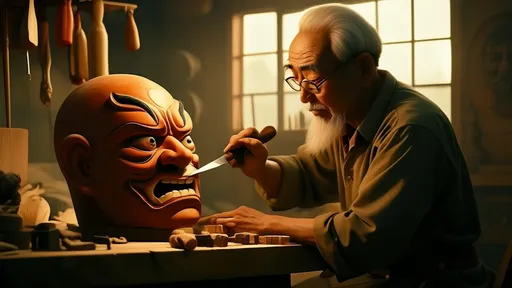
The carving process begins with blocks of camphor wood, chosen for its fine grain and resistance to cracking. Master carvers speak of "listening to the wood’s whispers" as they transform these raw materials into characters from Peking opera, Kunqu, and regional Fujianese theatrical traditions. A single puppet head requires over thirty specialized tools – from broad "tiger tooth" chisels for rough shaping to needle-thin gravers that etch individual strands of a beard. The final sanding uses paper mulberry bark, a local technique that produces an almost porcelain-like finish.
What distinguishes Zhangzhou puppets is their sophisticated expression gradient system. While novice carvers might create obviously exaggerated faces, true masters employ subtle variations that register differently from various audience sightlines. A slight downward tilt of the head can transform a dignified general’s stern command into world-weary resignation. The depth of eye sockets – calibrated to millimeter precision – determines how shadows interact with stage lighting during pivotal scenes. These technical considerations serve an artistic philosophy where restraint speaks louder than flamboyance.
The color symbolism in facial painting follows strict operatic conventions, yet allows for fascinating local interpretations. A crimson face might indicate loyalty in most traditions, but Zhangzhou carvers add a distinctive turquoise undertone to suggest inner conflict. Female roles feature an innovative "pearl powder" technique where crushed shells mixed with pigment create a luminous complexion that changes hue under candlelight. The elaborate headdresses aren’t mere decorations – their swaying beads and dangling ornaments extend the emotional vocabulary, with specific arrangements indicating whether a character’s anger is righteous or petty.
Contemporary challenges have spurred remarkable adaptations. When modern theaters demanded larger puppets for visibility, carvers reinvented their scaling techniques without losing expressive subtlety. Some workshops now produce "dual-expression" puppets with interchangeable face plates that rotate during performances – an innovation that would have been heresy to traditionalists but has attracted younger audiences. The craft’s UNESCO recognition in 2006 brought both preservation pressures and creative cross-pollination, with collaborations ranging from Japanese Bunraku troupes to avant-garde European theater directors.
Behind the exquisite artistry lies a rigorous training system. Apprentices spend years mastering just three fundamental expressions before attempting complete faces. The late master Huang Yiqing famously made students carve 100 identical noses until achieving absolute symmetry. This discipline ensures the survival of techniques like "hollow cheek" carving – creating internal resonating chambers that amplify the puppeteer’s voice during performances. Modern innovations coexist with ancient taboos; many workshops still avoid carving eyes on rainy days, believing humidity clouds a puppet’s spiritual clarity.
As night falls over Zhangzhou’s old quarter, the glow from family-run workshops reveals artisans breathing life into wood. In their hands, a block of camphor becomes a tyrannical minister whose smirk conveys cruelty without caricature, or a tragic heroine whose downcast eyes tell entire arias of unspoken sorrow. These silent performers continue their backstage rehearsal – waiting for the moment when human hands will grant them movement, and centuries of carved emotion will finally take the stage.
By /Aug 11, 2025

By /Aug 11, 2025

By /Aug 11, 2025
By /Aug 11, 2025
By /Aug 11, 2025
By /Aug 11, 2025

By /Aug 11, 2025

By /Aug 11, 2025
By /Aug 11, 2025

By /Aug 11, 2025

By /Aug 11, 2025
By /Aug 11, 2025
By /Aug 11, 2025

By /Aug 11, 2025
By /Aug 11, 2025
By /Aug 11, 2025

By /Aug 11, 2025

By /Aug 11, 2025

By /Aug 11, 2025
By /Aug 11, 2025