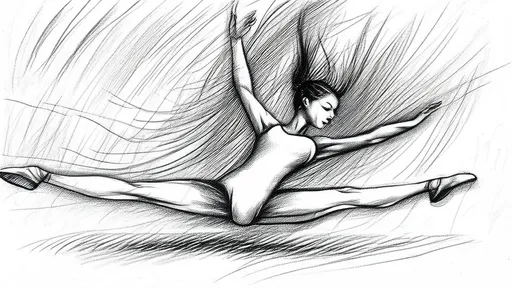
The art of capturing movement through line has fascinated artists for centuries, but nowhere is this more vividly expressed than in the dynamic sketching of dancers. Dance dynamic sketching, or the practice of translating the fluidity of human motion into lines on paper, bridges the gap between performance and visual art. It is an intricate dance of its own—one where the artist's hand must move as swiftly as the dancer's body, distilling ephemeral gestures into enduring marks.
At its core, this practice is about more than mere representation; it is an exploration of energy, rhythm, and emotion. Unlike static portraiture, dynamic sketching demands an intuitive understanding of weight, balance, and momentum. The lines themselves become alive, twisting and stretching in harmony with the dancer's form. Artists often speak of a kind of symbiosis—a moment where they feel connected to the movement they are depicting, as though their pencil is an extension of the dancer's limbs.
The challenge lies in the transient nature of dance. A pirouette lasts only seconds; a leap is over in the blink of an eye. To capture these fleeting moments, artists rely on quick, gestural strokes that prioritize essence over detail. The resulting sketches are often raw and unfinished, yet they pulsate with life. This immediacy is what makes dance sketching so compelling—it is art created in the heat of the moment, a direct response to the beauty unfolding before the artist's eyes.
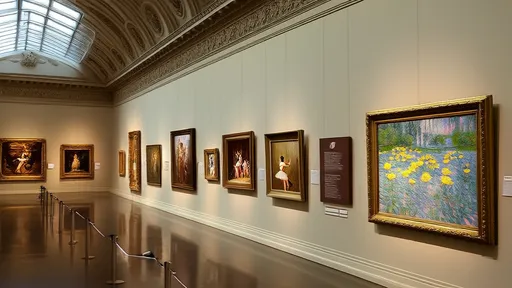
Historically, artists like Edgar Degas and Henri Matisse were masters of this form. Degas, with his countless studies of ballet dancers, demonstrated an unparalleled ability to convey grace and discipline through his lines. Matisse, on the other hand, embraced a more abstract approach, using bold, sweeping strokes to evoke the vitality of movement. Their work reminds us that dance sketching is not about perfection but about capturing the spirit of the performance.
Contemporary artists continue to push the boundaries of this art form. Some incorporate digital tools, using tablets and styluses to create fluid, animated sketches that mimic the motion they depict. Others experiment with mixed media, layering charcoal, ink, and even collage to add depth and texture to their work. The common thread is a relentless pursuit of authenticity—an attempt to freeze a moment of dance in time while preserving its inherent dynamism.
For dancers, these sketches serve as more than just artistic interpretations; they are mirrors reflecting their craft. Many choreographers use dynamic sketches as a tool for rehearsal, analyzing the lines to refine movements and improve alignment. Dancers themselves often find a strange kinship with these drawings, seeing in them a truth that photographs or videos cannot capture. There is something profoundly intimate about a sketch—it reveals not just the body's position but the intention behind each motion.
Workshops and live sketching sessions have become increasingly popular, bringing artists and dancers together in collaborative spaces. These events are a celebration of spontaneity, where the boundaries between performer and observer blur. Artists sketch as dancers improvise, each feeding off the other's creativity. The energy in these rooms is palpable, a testament to the power of shared artistic expression.
Ultimately, dance dynamic sketching is a dialogue—a conversation between movement and mark, rhythm and line. It is a reminder that art is not confined to galleries or stages but exists in the spaces between, where disciplines intersect and inspire one another. Whether rendered in pencil, ink, or pixels, these sketches are love letters to the human body in motion, capturing the poetry of dance one stroke at a time.

By /Aug 11, 2025
By /Aug 11, 2025
By /Aug 11, 2025
By /Aug 11, 2025
By /Aug 11, 2025
By /Aug 11, 2025

By /Aug 11, 2025

By /Aug 11, 2025
By /Aug 11, 2025

By /Aug 11, 2025

By /Aug 11, 2025
By /Aug 11, 2025
By /Aug 11, 2025
By /Aug 11, 2025
By /Aug 11, 2025
By /Aug 11, 2025

By /Aug 11, 2025

By /Aug 11, 2025

By /Aug 11, 2025
By /Aug 11, 2025