In the realm of cultural exhibitions, the catalog serves as both a companion and a standalone artifact—a bridge between scholarly rigor and public accessibility. The challenge lies in transforming dense academic research into engaging narratives that resonate with diverse audiences without diluting intellectual substance. This delicate balancing act defines contemporary exhibition catalog editing, where curators, designers, and writers collaborate to create publications that educate and inspire.
The traditional exhibition catalog often functioned as an archival document, prioritizing exhaustive academic citations over readability. Today’s editors recognize that such approaches risk alienating casual visitors while satisfying only specialists. The shift toward "public scholarship" demands catalogs that honor academic foundations while employing vivid storytelling techniques. This involves carefully distilling complex theories into digestible concepts, using visual metaphors, and structuring information hierarchically to guide readers through layers of depth.
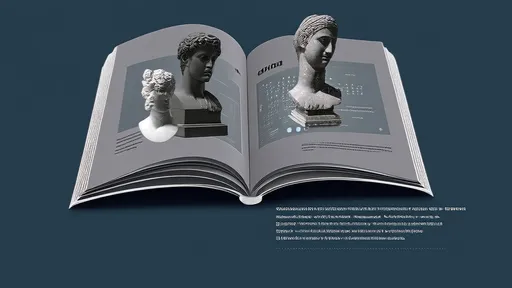
Visual thinking plays a pivotal role in this transformation. Editors now work closely with designers from the project’s inception, treating layout as narrative rather than decoration. A well-composed spread might juxtapose artifact photographs with infographics explaining their historical context, while pull quotes from scholars anchor abstract ideas in human perspectives. The spatial arrangement of content creates rhythm—alternating between dense analytical passages and immersive visual breaks to maintain reader engagement.
Language itself undergoes meticulous refinement. Specialized terminology gives way to precise yet approachable vocabulary, with jargon either eliminated or clearly defined through contextual clues. Sentence structures become more varied and dynamic, incorporating active voice and rhetorical devices that reward sustained reading. Footnotes don’t disappear but transform into sidebar narratives or augmented reality content accessible via QR codes, preserving academic integrity while reducing textual intimidation.
The most successful catalogs achieve something remarkable—they make readers forget they’re engaging with adapted scholarship. A section about ceramic dating techniques might open with a potter’s personal story before transitioning into scientific explanations. Catalog essays adopt literary techniques: scene-setting openings, character-driven narratives, and thematic through-lines that connect objects across centuries. This doesn’t represent a "dumbing down" but rather a translation, akin to converting mathematical proofs into musical compositions that convey the same truths through different sensory channels.
Digital convergence has further expanded editorial possibilities. Print catalogs now often companion with digital editions containing curator interviews, 3D artifact rotations, and user-generated content. This multilayered approach allows audiences to choose their engagement depth—skimming beautifully designed spreads during their museum visit, then exploring interactive timelines at home. The editor’s role evolves into that of an experience architect, considering how information unfolds across platforms and moments of encounter.
Resistance persists in some academic circles, where accessibility is mistakenly equated with compromised standards. Yet pioneering institutions demonstrate that public-facing catalogs can drive serious scholarship forward. The Whitney Museum’s Biennial publications, for instance, pair critical essays with artist-designed inserts, creating dialogues between theory and practice. The British Museum’s "A History of the World in 100 Objects" catalog became a surprise bestseller by treating artifacts as portals into human experiences rather than clinical case studies.
Ultimately, the edited exhibition catalog represents a new genre of knowledge dissemination—one that rejects the false dichotomy between intellectual depth and broad appeal. As cultural institutions confront pressures to demonstrate public value, these hybrid publications model how specialized knowledge can circulate beyond academic silos. The best editors don’t simplify complex ideas; they reveal why those ideas matter to all of us, using every tool of language, design, and digital innovation to make the past breathe and the present resonate.

By /Aug 11, 2025

By /Aug 11, 2025
By /Aug 11, 2025
By /Aug 11, 2025
By /Aug 11, 2025

By /Aug 11, 2025
By /Aug 11, 2025
By /Aug 11, 2025

By /Aug 11, 2025
By /Aug 11, 2025

By /Aug 11, 2025

By /Aug 11, 2025
By /Aug 11, 2025

By /Aug 11, 2025

By /Aug 11, 2025
By /Aug 11, 2025

By /Aug 11, 2025

By /Aug 11, 2025

By /Aug 11, 2025

By /Aug 11, 2025