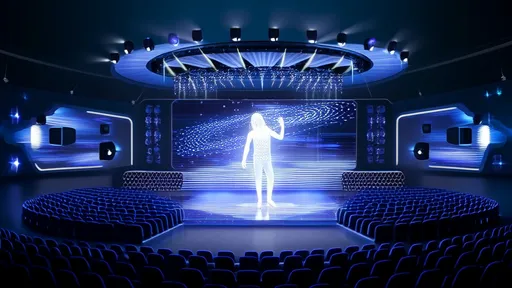
The entertainment industry has undergone a seismic shift in recent years with the advent of holographic concert technology. What once seemed like science fiction—performers appearing lifelike on stage despite being thousands of miles away or even deceased—has become a breathtaking reality. This innovation isn’t just a gimmick; it’s redefining the very essence of live performances, offering audiences an immersive experience that blurs the line between the physical and the digital.
The Mechanics Behind the Magic
At its core, holographic concert technology relies on a combination of advanced projection systems, motion capture, and sometimes even artificial intelligence. High-resolution 3D scans or recordings of artists are projected onto transparent screens or through specialized holographic displays, creating the illusion of a three-dimensional presence. The result is so convincing that audiences often forget they’re not watching a flesh-and-blood performer. Companies like Base Hologram and Pulse Evolution have pioneered these techniques, bringing legends like Tupac Shakur and Michael Jackson back to the stage with eerie realism.
One of the most critical components is the use of Pepper’s Ghost, an old theatrical trick modernized with cutting-edge tech. By reflecting images off angled glass or Mylar surfaces, the illusion of a floating figure is achieved. However, today’s iterations are far more sophisticated, incorporating real-time rendering and interactive elements that allow holograms to respond to crowd noise or even "make eye contact" with fans.
Why Audiences Can’t Look Away
The emotional pull of holographic concerts is undeniable. For fans of deceased artists, these performances offer a rare chance to witness their idols "live" once more. When Roy Orbison’s hologram toured in 2018, longtime fans wept as his voice filled arenas, accompanied by a visual replica that moved and gestured just like the man himself. It’s not just about nostalgia, though. Younger audiences raised on digital experiences find the fusion of technology and artistry inherently compelling—a natural evolution of the concert-going experience.
Moreover, the logistical benefits are impossible to ignore. Touring is notoriously grueling for artists, but holograms eliminate travel, fatigue, and scheduling conflicts. A single performance can be replicated across multiple continents simultaneously, maximizing revenue while minimizing environmental impact from reduced artist travel. This efficiency has made holographic shows particularly appealing to promoters in a post-pandemic world where live events carry higher financial risks.
The Ethical Tightrope
As with any disruptive technology, holographic performances raise complex questions. Who controls the likeness of deceased artists—estates, record labels, or tech companies? The controversial use of Amy Winehouse’s hologram for a planned tour sparked outrage from her family, highlighting the moral dilemmas surrounding posthumous digital recreations. Legal frameworks struggle to keep pace, with copyright laws varying wildly between jurisdictions regarding the use of a person’s image after death.
There’s also the artistic integrity debate. Purists argue that holograms lack the spontaneity of live performances—no off-script banter, no happy mistakes that become legendary concert moments. Detractors see them as elaborate karaoke, devoid of the human connection that makes live music transcendent. Yet proponents counter that these shows introduce classic artists to new generations who’d otherwise never experience them, preserving cultural legacies in an unprecedented way.
What Lies Beyond the Horizon
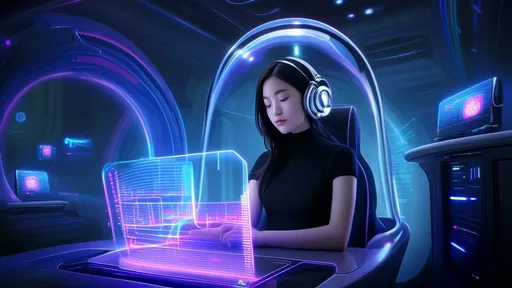
The next frontier involves merging holography with augmented reality (AR). Imagine attending a concert where your AR glasses allow you to see customized holograms interacting with the physical venue—a personal front-row experience regardless of your actual seat. Startups are already experimenting with volumetric video capture that would enable fans to "walk around" a holographic performer via VR headsets, adding unprecedented interactivity.
As 5G networks expand, the potential for real-time holographic streaming becomes feasible. Artists could "beam in" from studios worldwide for hybrid performances where local bands share stages with holographic headliners. The technology’s applications extend beyond music too—theatre, keynote speeches, and even education stand to be transformed by these advancements.
The holographic concert revolution isn’t about replacing live performers; it’s about expanding the palette of human expression. Like the transition from silent films to talkies or vinyl to streaming, initial resistance gives way to new creative possibilities. As the technology becomes more accessible, we may soon see indie artists crafting holographic shows from their garages—democratizing an experience that currently requires seven-figure investments. One thing’s certain: the stage will never look the same again.
By /Aug 13, 2025
By /Aug 13, 2025

By /Aug 13, 2025

By /Aug 13, 2025
By /Aug 13, 2025

By /Aug 13, 2025
By /Aug 13, 2025
By /Aug 13, 2025

By /Aug 13, 2025

By /Aug 13, 2025

By /Aug 13, 2025

By /Aug 13, 2025
By /Aug 13, 2025

By /Aug 13, 2025

By /Aug 13, 2025
By /Aug 13, 2025

By /Aug 13, 2025
By /Aug 13, 2025

By /Aug 13, 2025
By /Aug 13, 2025